Can Germany Go All the Way? Assessing Their World Cup Chances Under Nagelsmann
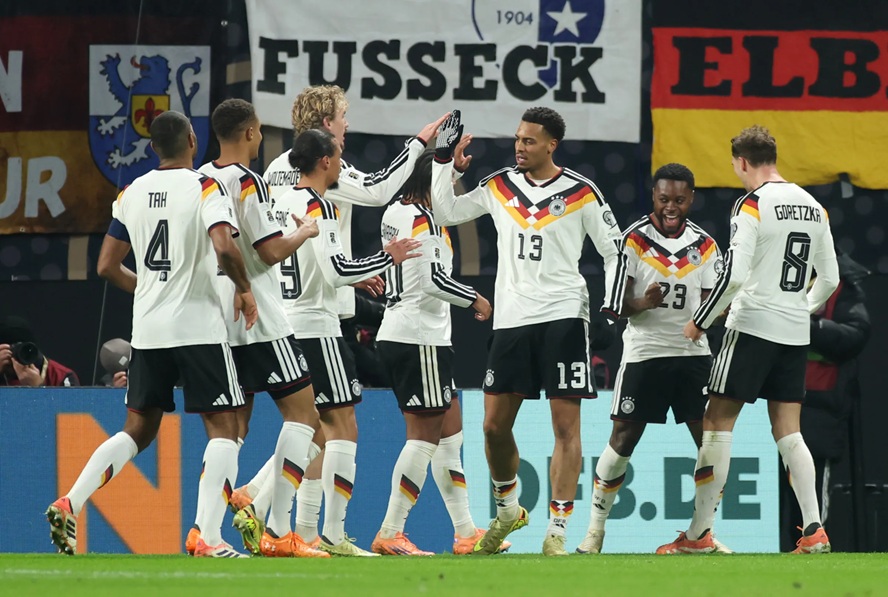
Germany arrive at the upcoming World Cup carrying a mixture of intrigue, doubt, and cautious optimism.
After suffering the humiliation of back-to-back group-stage eliminations in the previous two tournaments, Die Mannschaft now step onto the global stage with something to prove. Under the guidance of Julian Nagelsmann, this is a team undergoing transition—one that blends youthful brilliance with lingering uncertainty.
The key question is whether that combination is enough to mount a serious challenge for the trophy.
A New Generation Takes the Lead
For years, Germany relied on experienced figures like Toni Kroos and Ilkay Gundogan to orchestrate play in midfield. Their composure and intelligence defined the team’s rhythm, but both are now absent from the current setup. In their place, a new creative core has emerged, led by Florian Wirtz and Jamal Musiala—two of the most exciting talents in European football.
At just 23 years old, both players are already expected to shoulder immense responsibility. Wirtz, now at Liverpool following a high-profile transfer, and Musiala at Bayern Munich represent the attacking heartbeat of this side. Yet, their recent form has been inconsistent. Wirtz took time to settle into his new club environment, while Musiala saw his season disrupted by a long-term injury. Their ability to rediscover peak performance at the right time will be crucial.
When both are firing, Germany possess the creativity to unlock even the most disciplined defenses. Their movement, vision, and technical skill give Nagelsmann’s side a dimension that few teams can match. However, creativity alone does not win tournaments—and Germany’s attacking line has been dealt several setbacks.
The Striker Question Remains Unresolved
One of the biggest concerns surrounding this team is the lack of a reliable goal-scoring presence. Kai Havertz is expected to lead the line, and while he has proven capable in key moments, he does not fit the traditional mold of a prolific striker. His technical qualities are unquestioned, but consistency in front of goal has often been an issue.
The situation becomes even more complicated when considering injuries to other attacking options. Serge Gnabry, who would have provided both experience and versatility, is unavailable, while promising youngster Lennart Karl also misses out due to injury. This leaves Leroy Sané as a potential solution on the wing—a player whose best years may be behind him but who still possesses the talent to influence games in flashes.
Ultimately, Germany may need goals to come from across the team rather than relying on a single source. Midfielders and wide players will have to step up consistently if they are to progress deep into the tournament.
Defensive Fragility: A Major Concern
If Germany’s attack inspires cautious optimism, their defense raises serious questions. The central defensive pairing of Nico Schlotterbeck, who recently signed a new contract at Borussia Dortmund, and Jonathan Tah has yet to demonstrate the level of stability required at World Cup level. While both are individually capable, their partnership has shown vulnerabilities, particularly when under pressure.
Adding complexity to the situation is Antonio Rüdiger’s role. Once a guaranteed starter, he has now been positioned as a backup option. Despite his experience and physicality, his aggressive playing style has made him a polarizing figure, with concerns over discipline potentially limiting his involvement. However, given his undeniable qualities, he could yet play a significant role if the preferred pairing falters.
Elsewhere in defense, Joshua Kimmich continues to operate at right back, despite his natural inclination toward midfield. While his intelligence and technical ability make him a valuable asset, this positional decision limits Germany’s options in central areas. On the opposite flank, the battle between David Raum and Nathaniel Brown introduces an interesting dynamic, particularly with Brown’s pace and attacking potential marking him as a possible breakout performer.
Still, the overarching issue remains consistency. Germany have shown a worrying tendency to concede avoidable goals, often undermining otherwise dominant performances. Unless this is addressed, their chances of lifting the trophy will be significantly diminished.
The Goalkeeping Gamble
In goal, Germany have made a surprising decision by bringing Manuel Neuer out of international retirement. The veteran goalkeeper, now 40, remains one of the most recognizable figures in world football, but questions over his reliability persist. While he is still capable of producing world-class performances, inconsistency and injury concerns have become increasingly prominent.
Nagelsmann’s choice to reinstate Neuer has pushed Oliver Baumann down the pecking order, despite the latter having been designated as the starting goalkeeper earlier. This decision reflects both faith in Neuer’s experience and a willingness to take a calculated risk. However, the possibility of injury or underperformance means Germany must be prepared to adapt quickly if needed.
Nagelsmann Under Scrutiny
The spotlight is not only on the players but also on the man leading them. Julian Nagelsmann remains one of the most tactically innovative coaches of his generation, yet his recent handling of the national team has raised eyebrows. His public statements have occasionally created confusion, with comments about player roles and selections not always aligning with subsequent decisions.
Such inconsistencies can undermine confidence, both within the squad and among supporters. At a tournament where clarity and cohesion are vital, Nagelsmann must ensure his messaging is precise and his decisions consistent. The pressure on him is considerable, particularly given Germany’s recent history of underperformance on the global stage.
Can Germany Win It All?
Predicting Germany’s fate at this World Cup is far from straightforward. On one hand, they possess a wealth of attacking talent, innovative players, and a coach capable of implementing bold ideas. If their creative stars find form and the team clicks collectively, they have the potential to compete with the very best.
On the other hand, there are too many unanswered questions to ignore. Defensive instability, a lack of a proven goal scorer, and uncertainty in key positions all pose significant risks. Additionally, the path through the knockout stages could be unforgiving, with the prospect of facing elite opponents early on.
Realistically, reaching the latter stages of the tournament would represent a successful campaign and signal that Germany are firmly back among the world’s elite. A semi-final or final appearance is within reach if things fall into place. However, an early exit remains a genuine possibility if their weaknesses are exposed.
A Team Defined by Uncertainty
Germany enter this World Cup as one of the tournament’s great enigmas. They are neither clear favorites nor outsiders, but rather a team capable of producing brilliance one moment and frustration the next. Their journey will likely depend on how effectively they can balance their strengths against their flaws.
In many ways, this tournament represents a fresh start—a chance to move beyond past disappointments and redefine their identity. Whether that leads to triumph or further disappointment will depend on their ability to find consistency, resilience, and belief when it matters most.